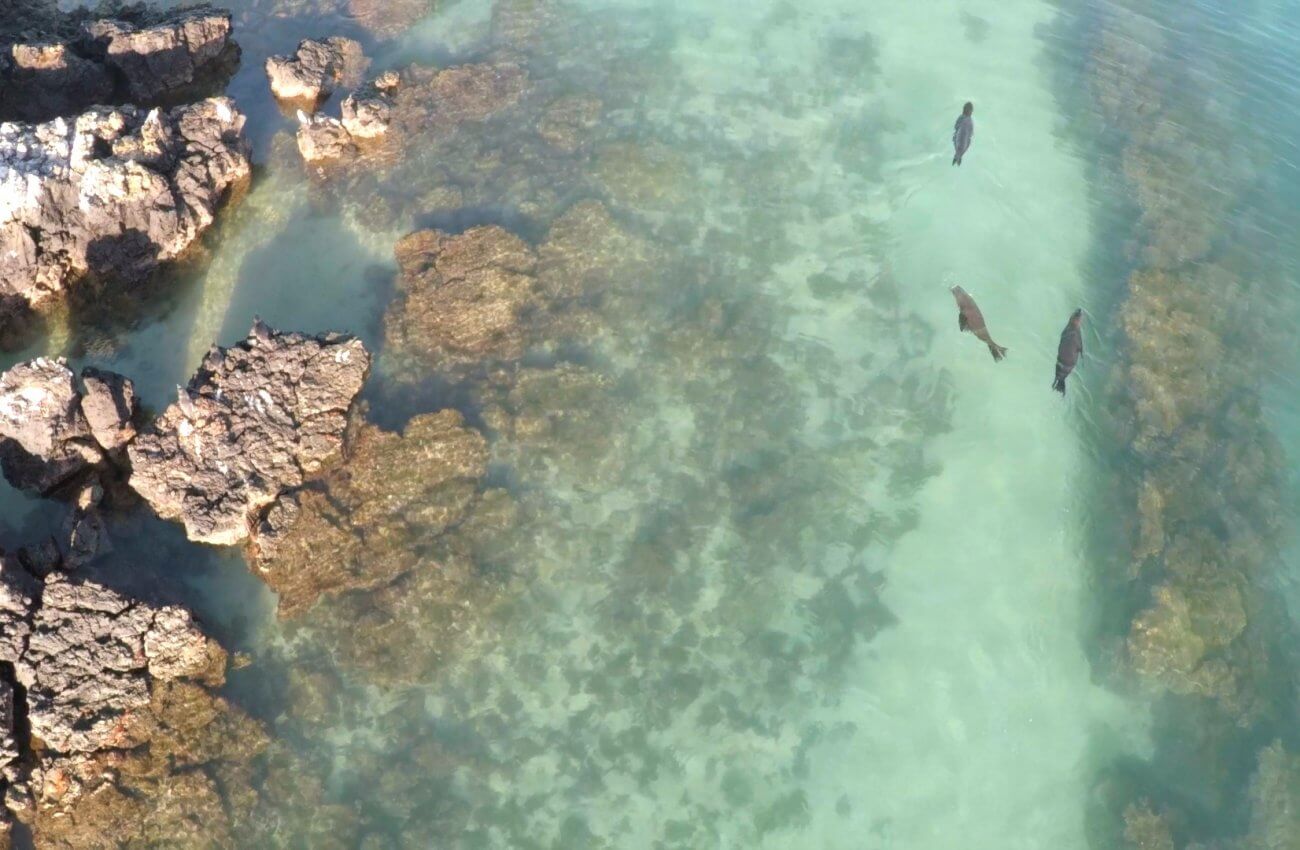
Galapagos Sea Lions are endemic to the Galapagos Islands, this means they are found nowhere else in the world. Galapagos Fur Seals can also be found in the archipelago.
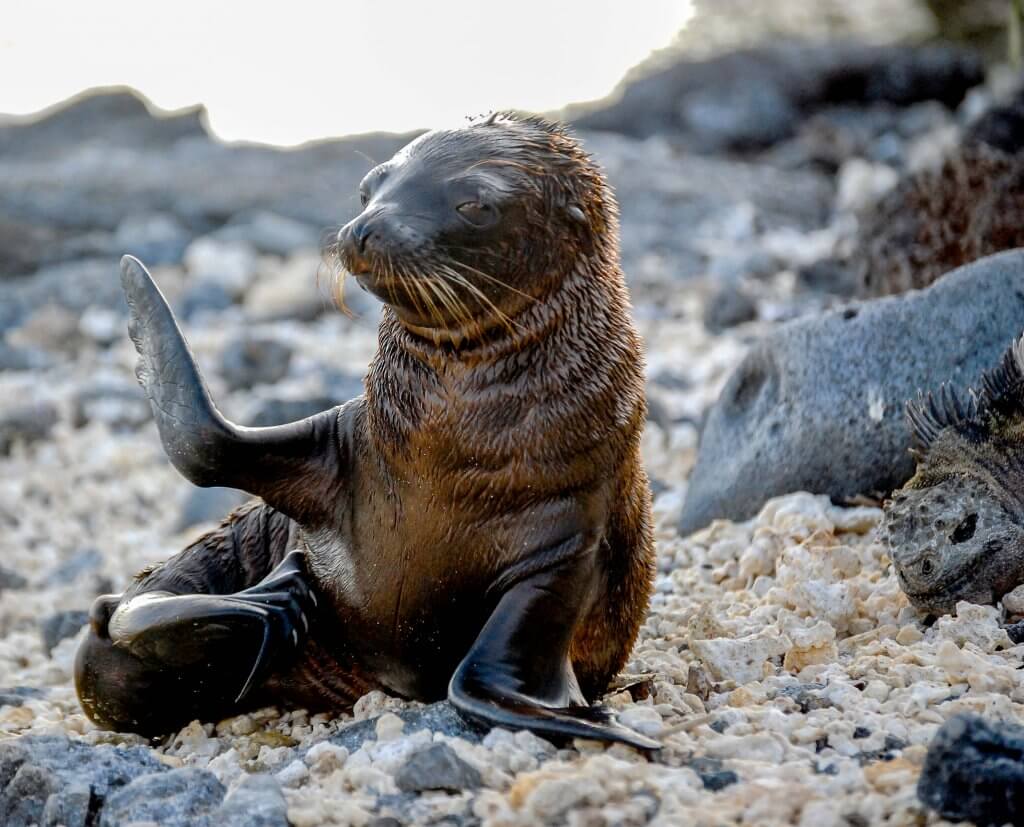
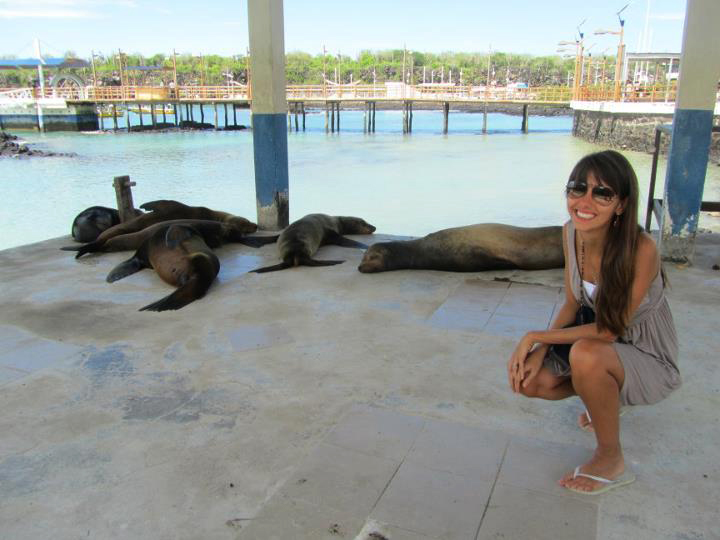
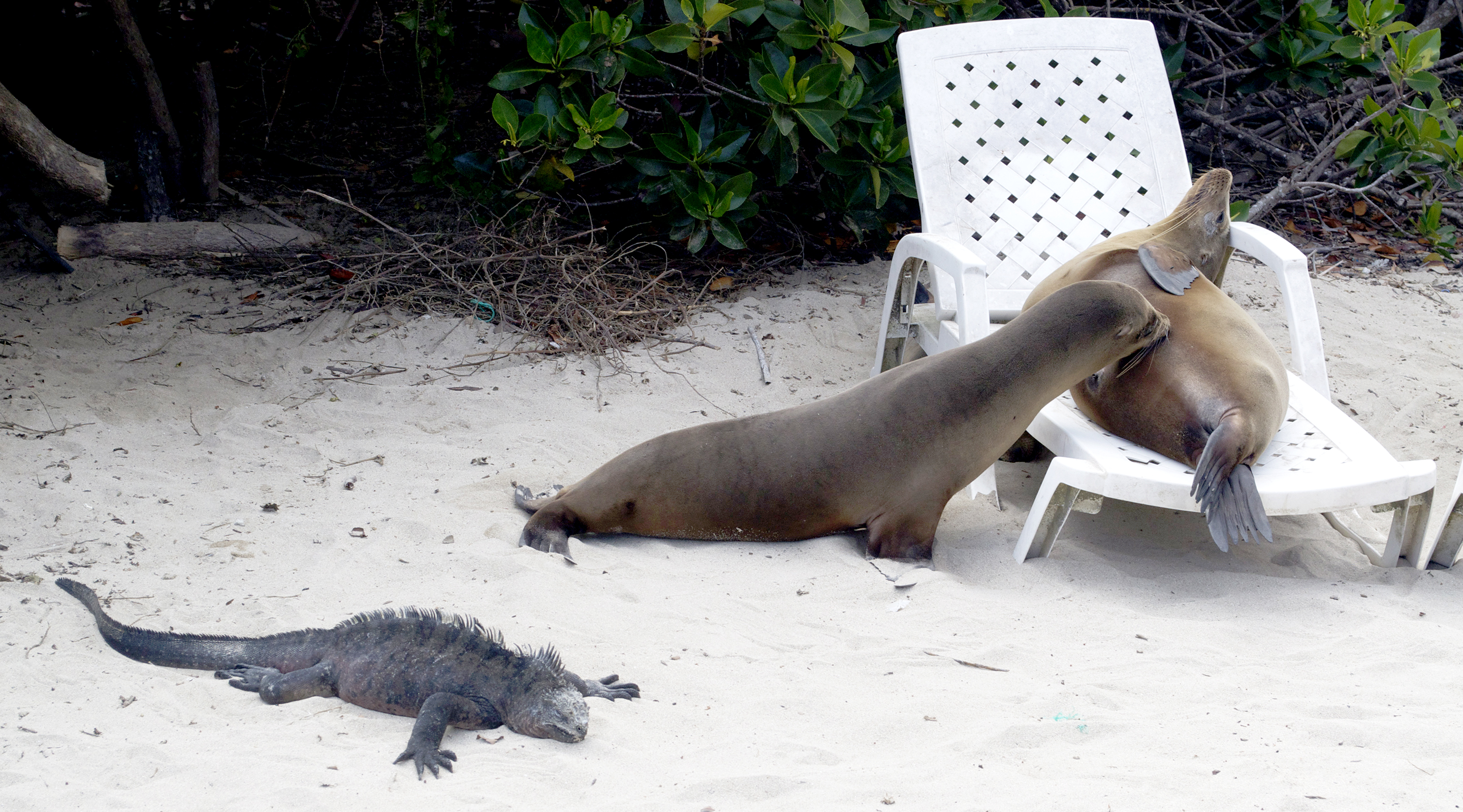
Galapagos sea lions are more numerous and more commonly encountered in the islands than the Galapagos Fur Seals. Though they are closely related to California sea lions, Galapagos Sea Lions are smaller and genetically distinct. They are active during the day (diurnal) and feed mainly on fish and squid. They are very social and often found in large groups in habitats shared with humans such as sandy beaches, docks, moored boats and quite often benches in town.
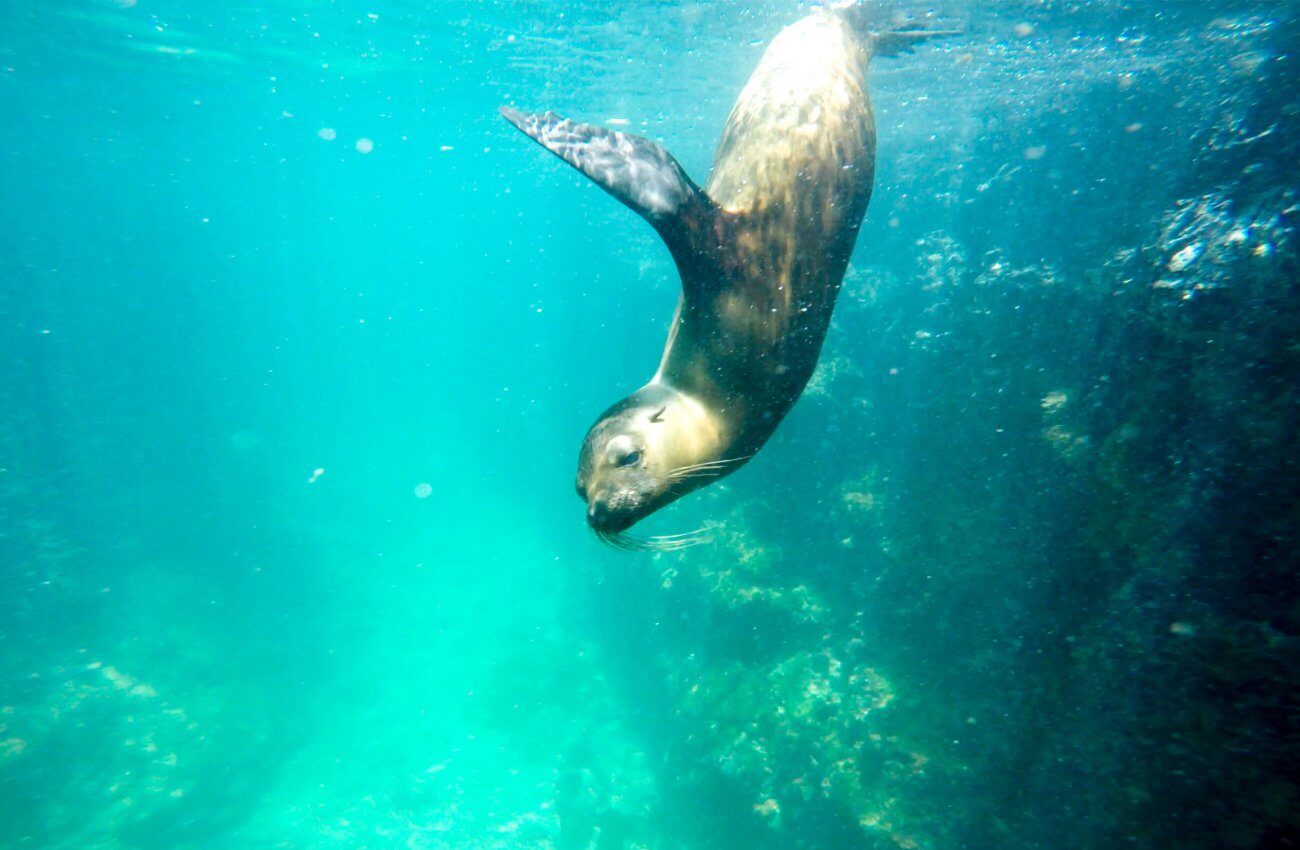
Galapagos Sea Lions are excellent swimmers and can dive to depths of (650ft) 200m while holding their breath for up to 10 minutes. They typically hunt near the shore but can travel farther out when prey is scarce.
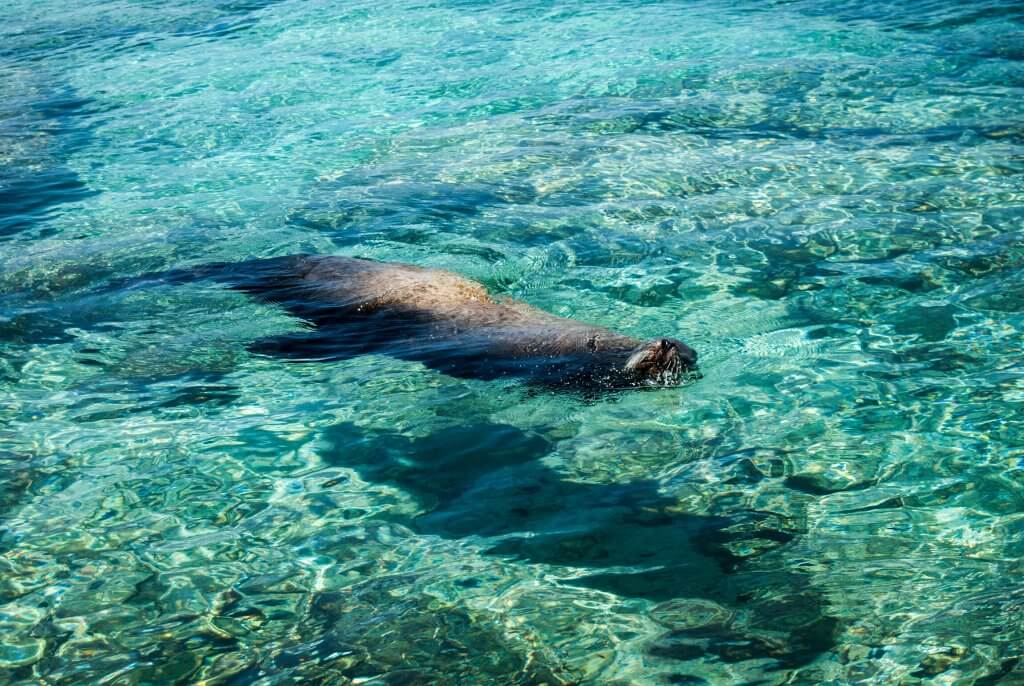
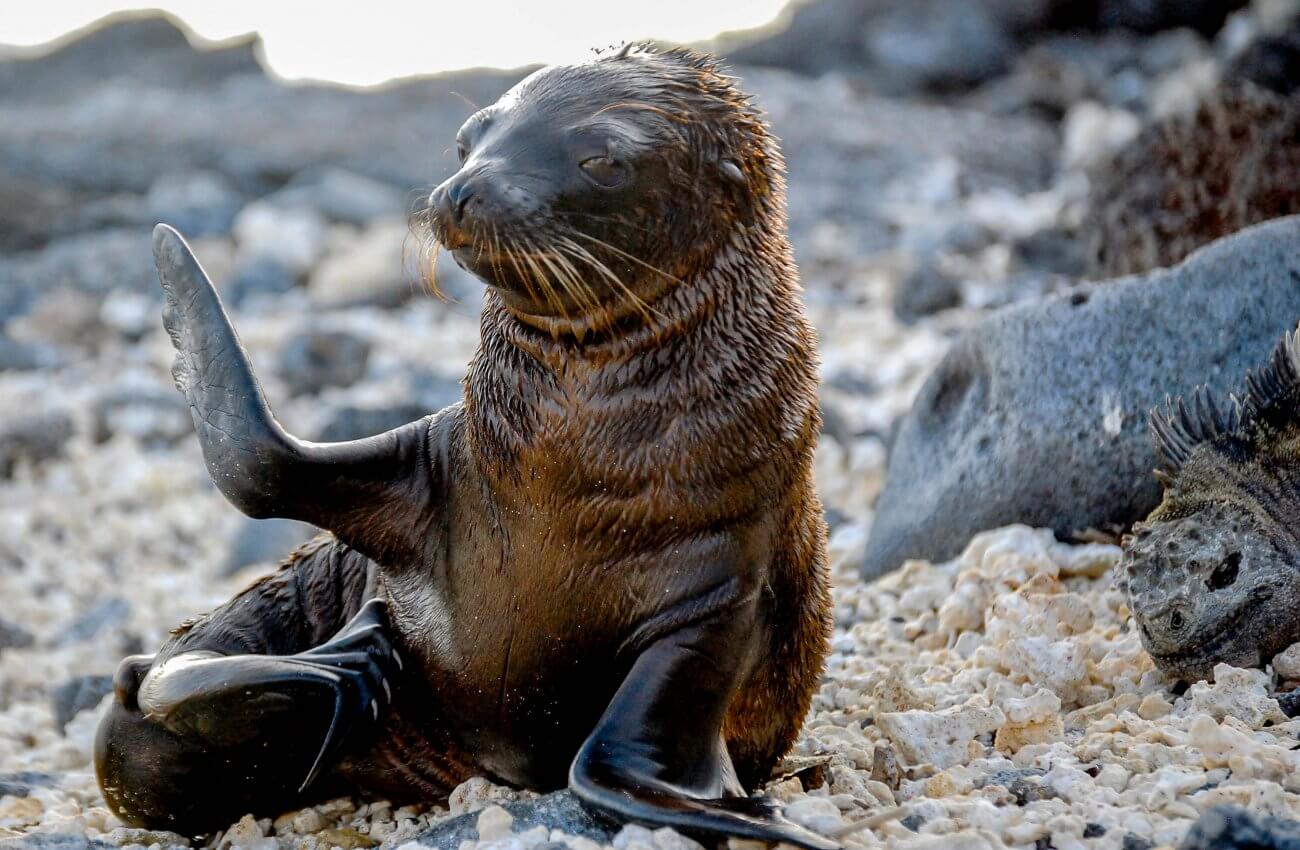
Sea lions are larger than fur seals with the males growing as large as 550lbs/250kg. They are light to dark brown (pups are born darker) with shorter, coarser fur, a pointed “dog-like” nose and visible ear flaps.
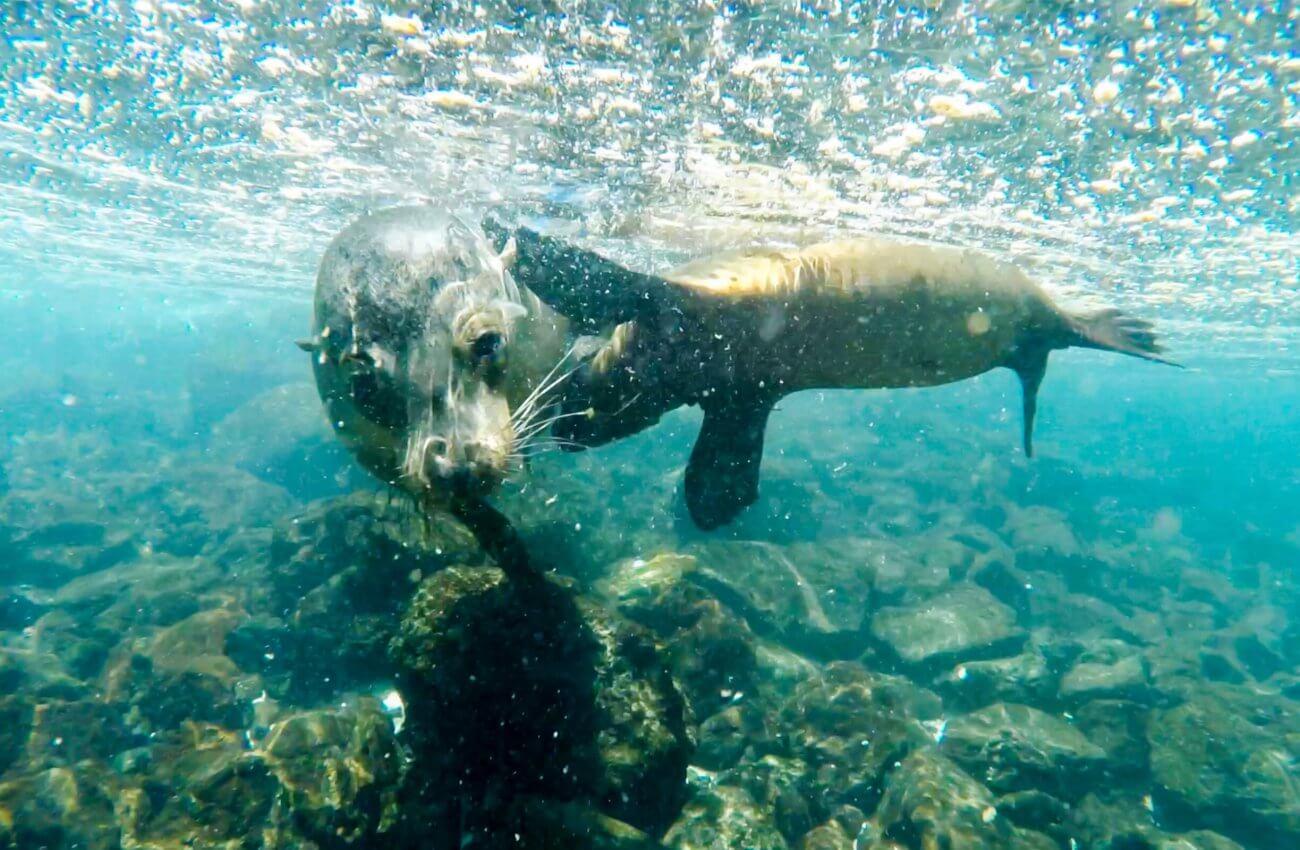
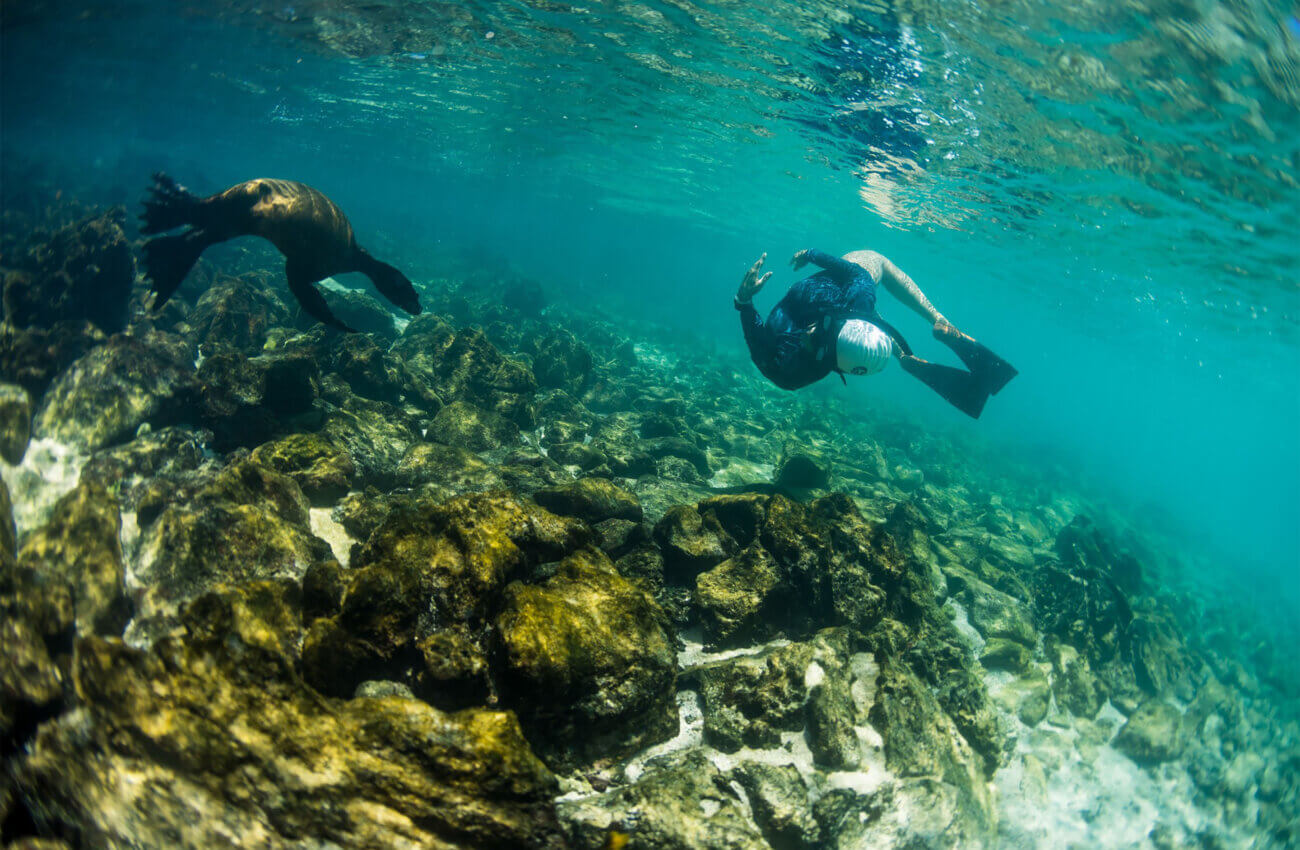
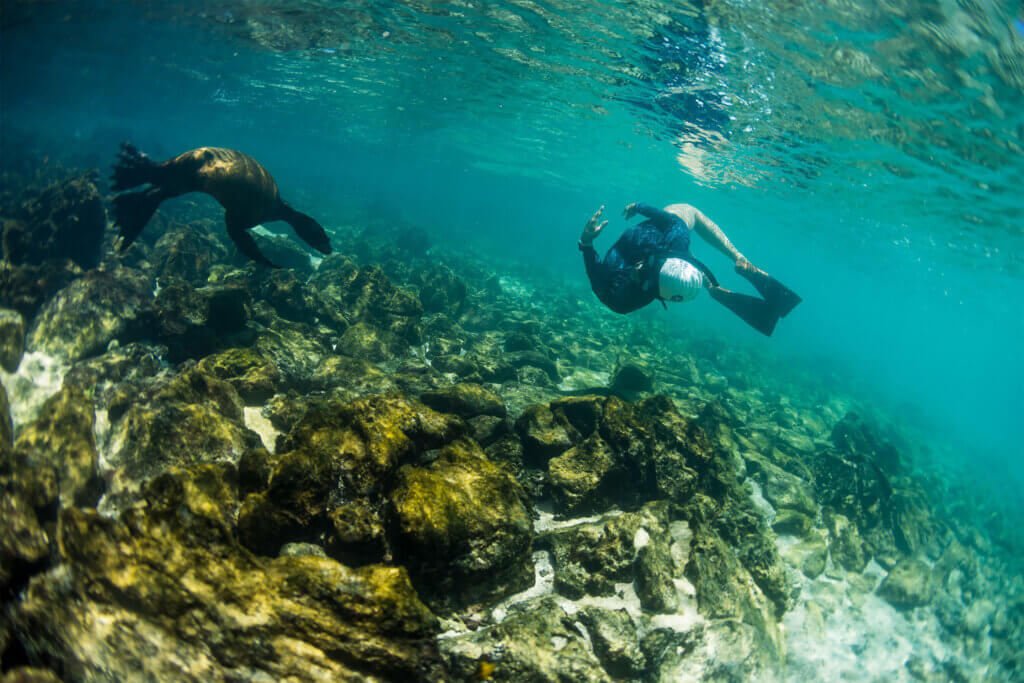
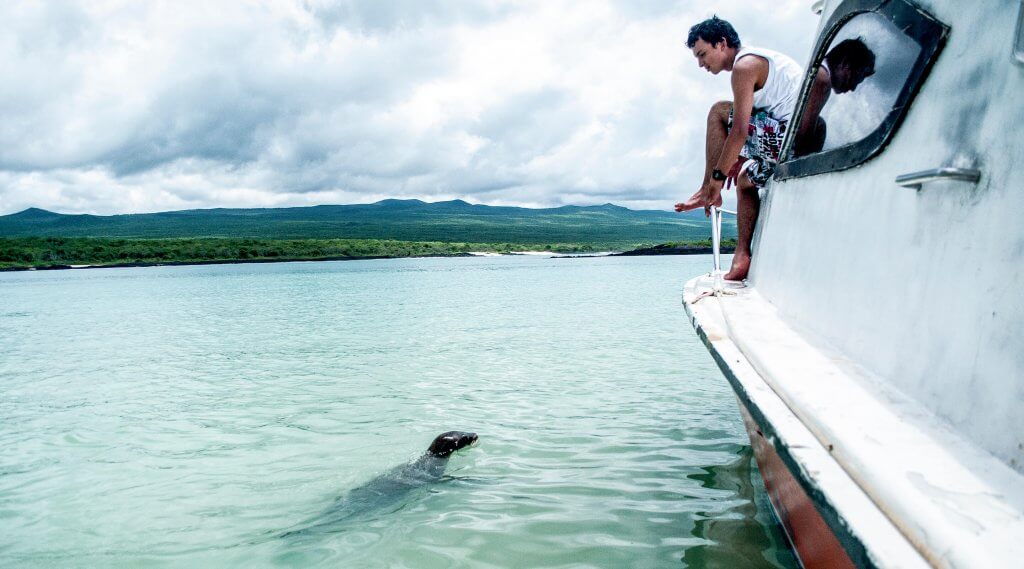
Galapagos Sea Lions are playful, curious animals that often will approach snorkelers and divers. Though females and pups can be extremely welcoming, Bulls can be aggressive, especially when their harem of females is approached. As with all animals in the Galapagos, they are protected and should be respected.
Galápagos fur seals (Arctocephalus galapagoensis) are also endemic to the Galapagos Islands. They are the smallest fur seal species on the planet. They mainly live on the rocky western and northern coasts of the Galápagos (especially on Isabela and Fernandina islands, where the waters are cooler and richer in fish). Their population is much smaller and are considered endangered. They are primarily nocturnal animals and can be found resting in the shade on rocky ledges and lava crevices during the day. They have thicker, wooly fur and larger “puppy dog-like” eyes due to their nocturnal habits. These fur seals hunt small fish and squid at night.
You are more likely to encounter Sea Lions while in the Galapagos. If you see a big, loud, social group basking on a beach or pier they are most likely Sea Lions. If you find a smaller, shy animal resting in the shade it is probably a Fur Seal.
Both species form harems with territorial males that protect their groups of females.
Pups nurse for about a year but may continue to stay close to their mothers longer.
Sea Lions breed between July to December. Fur Seals breed August to November.
While the Fur Seals are a bit more reclusive, Sea Lions are quite proliferate throughout the archipelago. Whether on land or in the water, you will undoubtedly have multiple interactions with these playful Sea Lions on any trip to the Galapagos Islands.