The Iguanas found in the Galapagos are some of the most interesting in the world.
Galapagos Iguanas have distinct evolutionary adaptations due to the diverse environmental challenges found on the different islands.
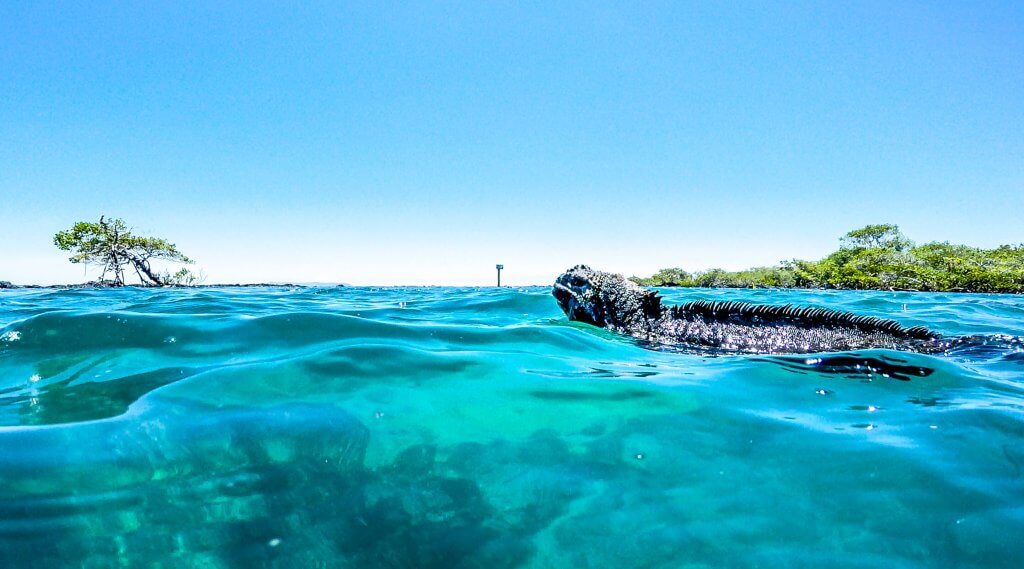
Marine Iguanas (Amblyrhynchus cristatus)
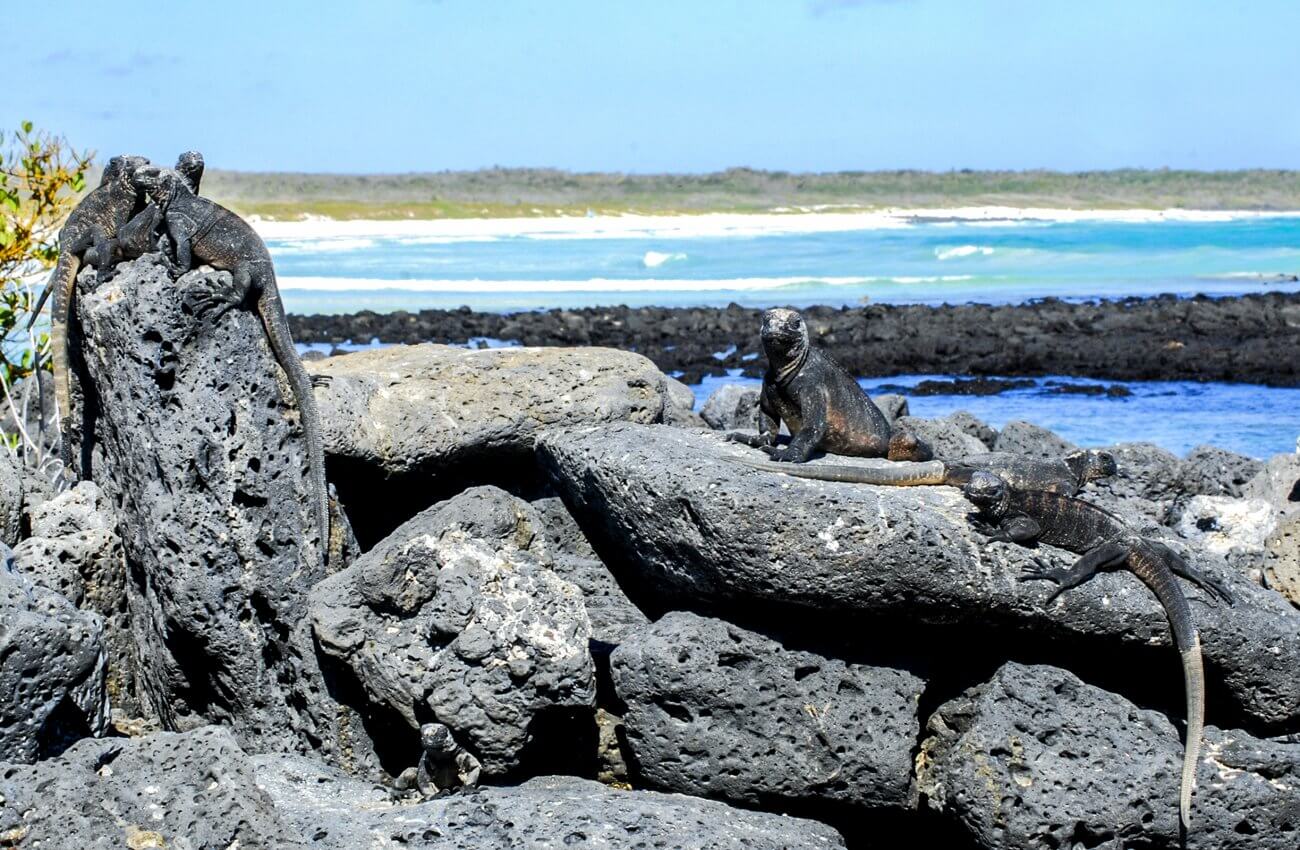
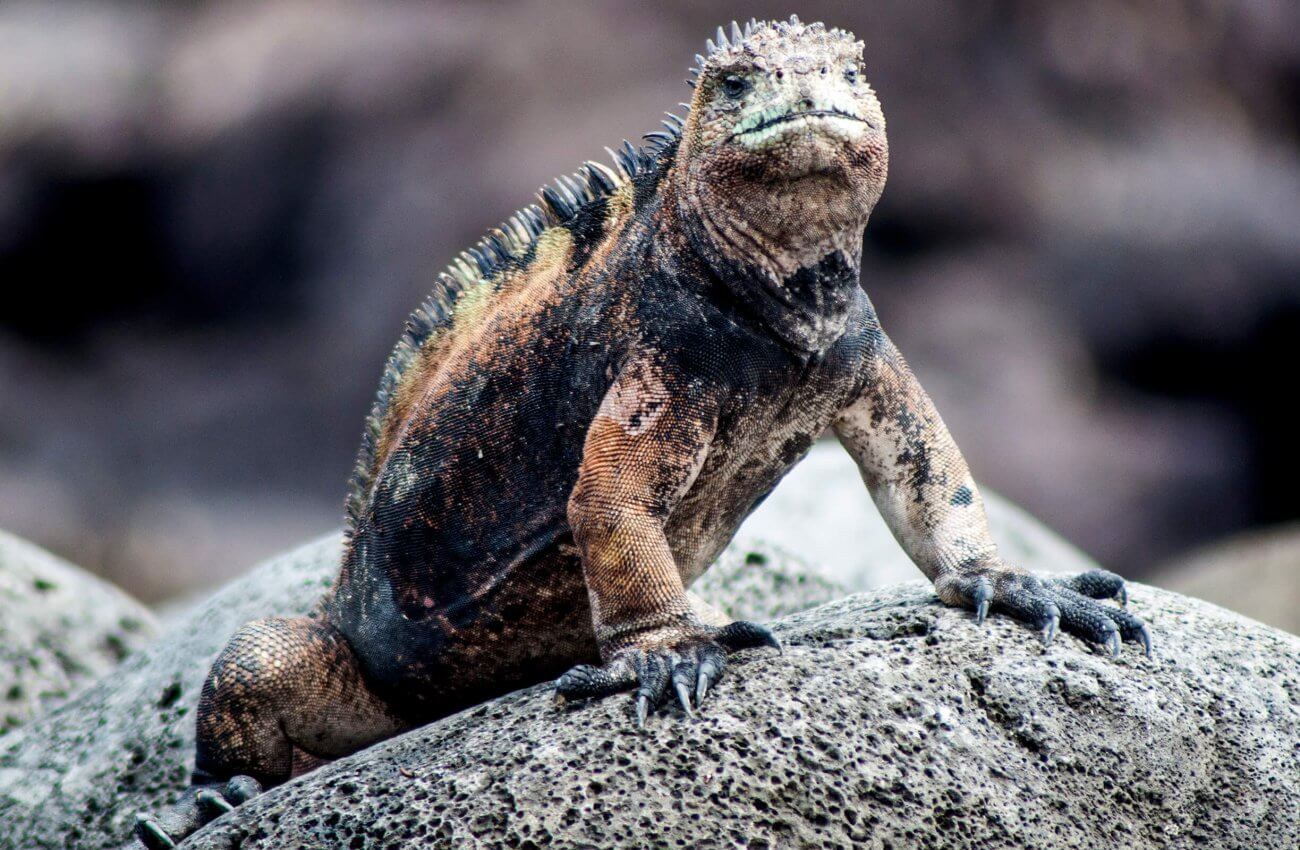
Perhaps the most unique are the Marine Iguanas. This endemic species* are recognized as the only sea-going iguanas in the world. (*found only in the Galapagos). Marine Iguanas have adapted to a diet of algae and sea weed. They can often be spotted swimming near shore where they graze underwater, sometimes in depths up to 30ft/10m. They have developed flattened tails which aid in swimming and strong claws to grip rocks against the current will feeding underwater and exiting the water. On land they can be seen “sneezing” salt out of special glands near their noses.
Marine Iguanas are black or dark gray in order to absorb heat from the sun. Males turn bright red and green during mating season (these are the “Christmas Iguanas that can be found on Española Island).
These social animals can often be seen basking on rocks in large groups to warm up after diving in the cold waters of the Galapagos.
Land Iguanas (Genu Conolophus)
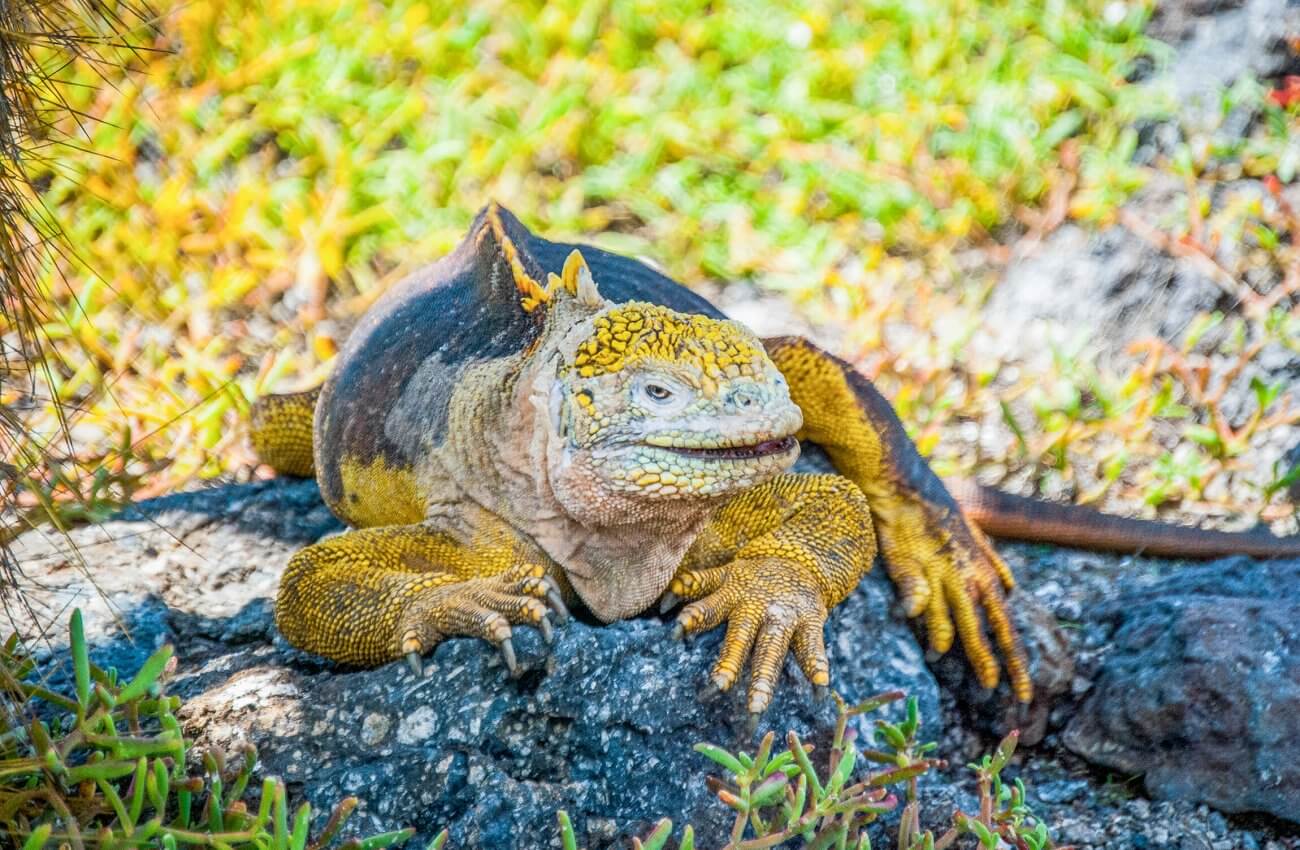
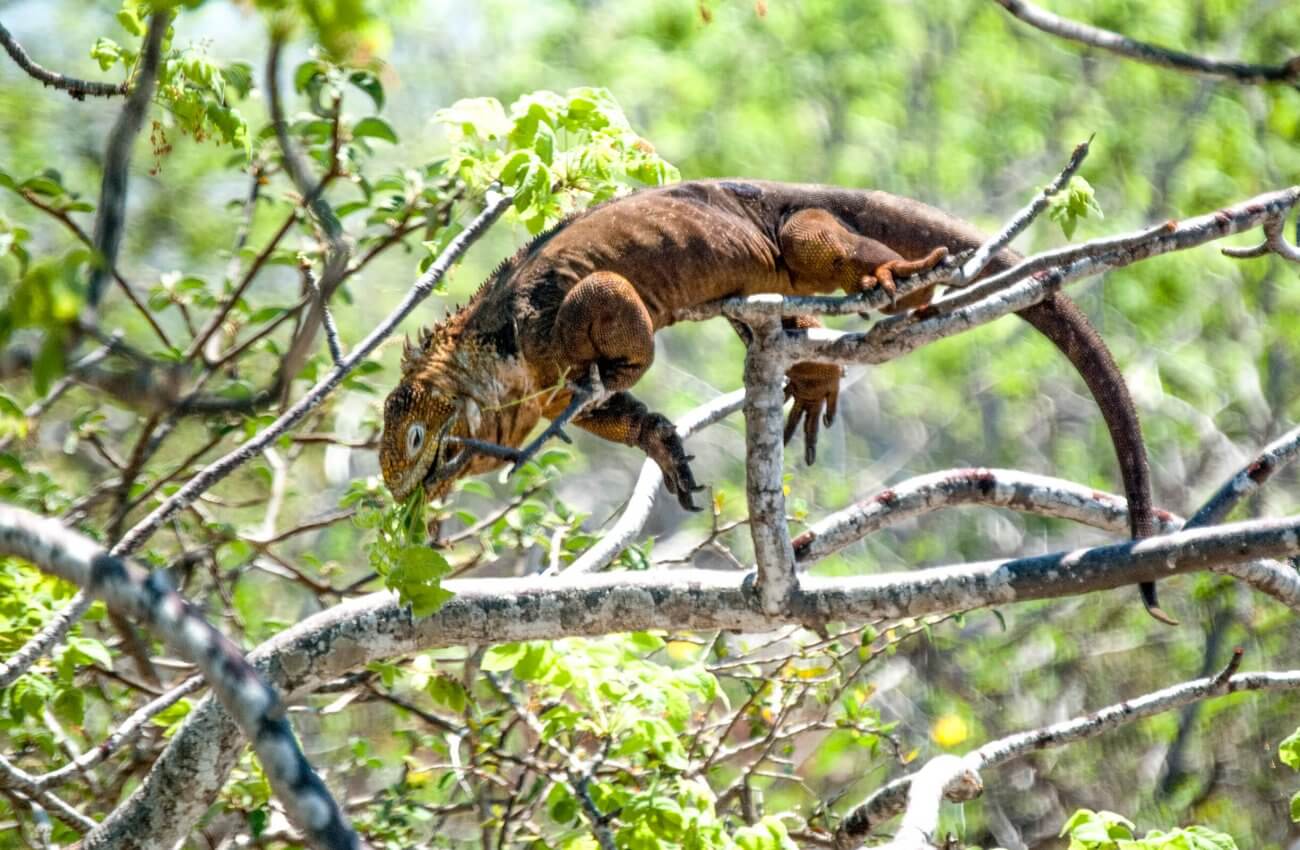
There are three recognized species of Land Iguanas in the Galapagos Islands, which are terrestial herbivores that live in mainly arid zones.
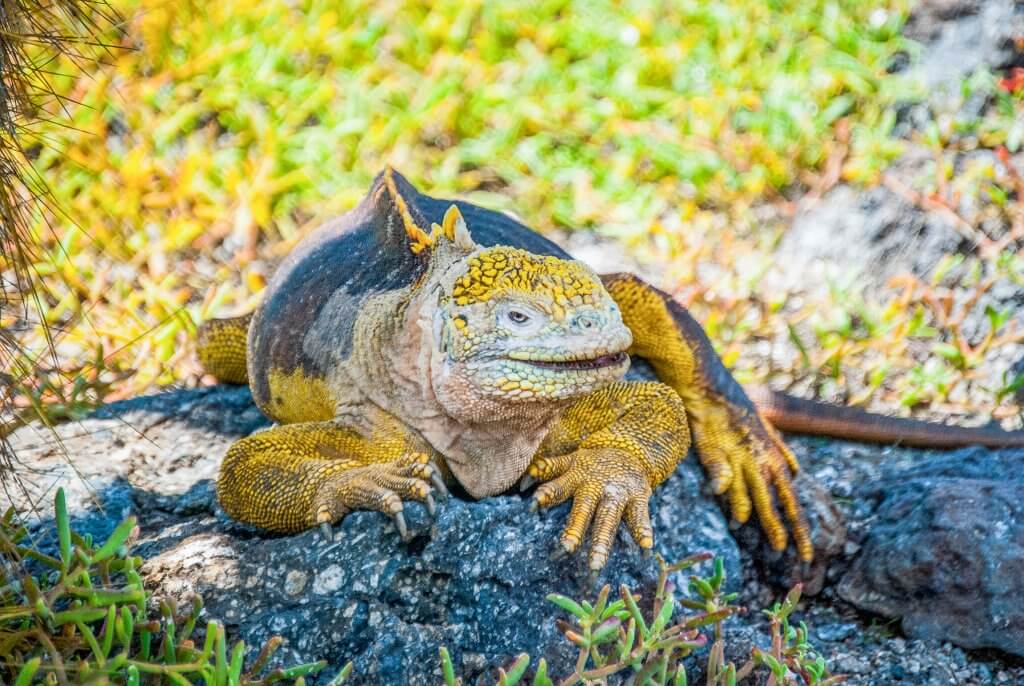
Yellow Land Iguanas (Conolophus subcristatus)
These iguanas have a distinctive yellow-orange color with brown backs. They eat primarily cactus pads, fruit and flowers and can be found on Baltra, Santa Cruz, Isabela and Fernandina Islands.
Santa Fe Land Iguanas (Conolophus pallidus)
These iguanas are found only on Santa Fe Island. They have a paler color with longer spines and a tapered snout.
Pink Iguanas (Conolophus marthae)
These iguanas are extremely rare, found only on Wolf Volcano (northern Isabela). They have a striking pink body with black stripes. Pink iguanas were discovered in 1986 and recognized as a distinct species in 2009. They are critically endangered with an estimated population only a few hundred individuals.
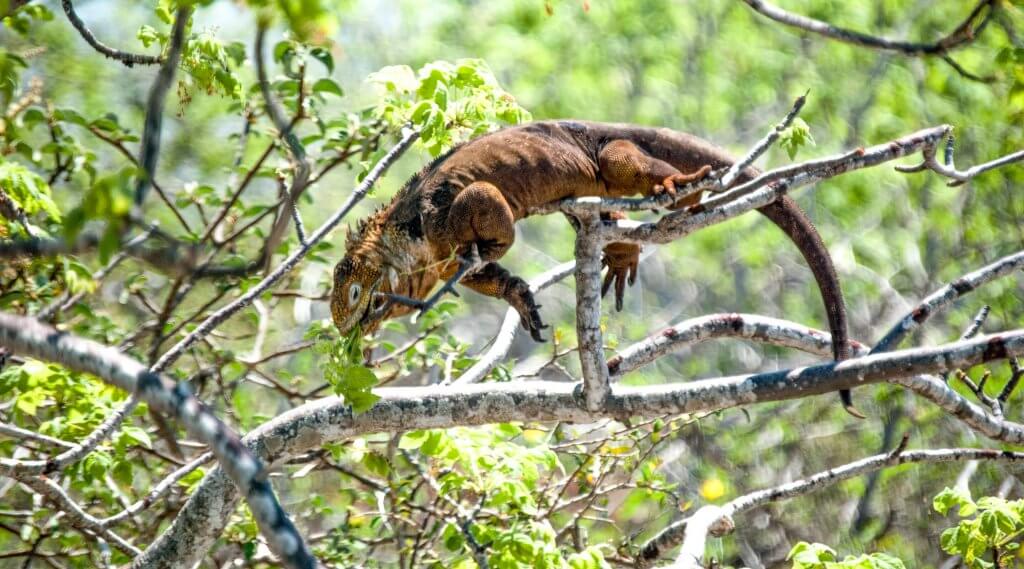
Iguanas play a key role in the Galápagos ecosystem by spreading seeds and maintaining plant balance. Both marine and land iguanas descended from a common ancestor that rafted to the islands from South America millions of years ago.